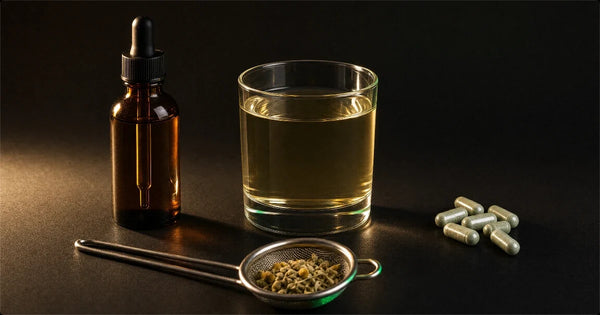
Mullein tea is one of the simplest herbal infusions you can make at home, and it only takes about 15 minutes. This guide gives you a precise mullein tea recipe first, then walks through sourcing, flavor ideas, traditional uses, and safety so you can brew with confidence.
Key Takeaways
The core recipe is straightforward: measure about 1 to 2 teaspoons of dried mullein leaves per 8 oz (240 ml) of hot water, steep 10 to 15 minutes, then strain very finely through cheesecloth or a coffee filter to remove mullein leaf hairs.
Mullein tea is traditionally used for respiratory comfort - coughs, throat irritation, and congestion - but modern human research is limited and does not prove specific health outcomes. The effectiveness of mullein tea has not been established in large-scale human trials.
Always strain well, watch for allergic reactions, and talk with a clinician before using mullein regularly if you are pregnant, breastfeeding, or managing chronic conditions.
Mullein tea is brewed from the leaves and flowers of the Verbascum thapsus plant and is naturally caffeine-free.
If you want a more concentrated, convenience-focused option, Hytz offers Lung Hero, a supplement combining mullein leaf extract with NAC and other ingredients for daily respiratory support.
What Is Mullein Tea? (Quick Context Before You Brew)
Common mullein (Verbascum thapsus) is a tall, biennial plant with soft, fuzzy mullein leaves. It's native to Europe, northern Africa, and Asia, but it now grows wild across North America. For centuries, people have used it in teas, syrups, and oils - especially for the lungs and throat.
Mullein tea is a simple herbal infusion made from dried mullein leaf or flowers steeped in hot water. It's mild in flavor, slightly earthy, and easy to drink plain or blended with other herbs.
Traditional uses center on respiratory irritation, cough, throat scratchiness, and general soothing during colds. These are ethnobotanical claims, not proven medical treatments. Mullein contains saponins that help treat respiratory diseases in traditional practice, and herbalists have long valued it for its potential to soothe irritated airways.
Ethnomedicinal surveys - such as research documenting traditional plant preparation among the Gujjar and Bakerwal tribes (PMID 25680841) - confirm that tea and decoction are among the most common ways people historically prepared medicinal plants. About 27.8% of remedies in that survey used decoction or tea as the preparation method. This provides historical context, not clinical proof.
Simple Mullein Tea Recipe (Step-by-Step)
This is the main mullein tea recipe - everything you need to start brewing right now.
Ingredients (one mug):
1 to 2 tablespoons of dried mullein leaves (or a blend of dried leaves and flowers)
8 oz (about 240 ml) of just-boiled water
Optional: a slice of lemon, 1 teaspoon of raw honey, or a small piece of fresh ginger
Steps:
Pre-warm your cup or mug by rinsing it with hot water, then emptying it.
Add the dried mullein to a teapot, French press, or heat-safe mug with a lid.
Pour boiling water over the plant material. Let it cool for just a few seconds before pouring if you want to avoid scorching delicate flowers.
Cover and steep for 10 to 15 minutes. Some herbalists steep mullein leaves in boiling water for up to 30 minutes for a stronger brew.
Strain very thoroughly. Pour the liquid through a fine-mesh strainer lined with cheesecloth, or use a coffee filter. This step is non-optional - mullein leaves are covered in tiny hairs that can cause throat irritation if left in the tea.
Add honey, lemon, or ginger to taste. Mullein tea is often sweetened with honey or lemon to balance any faint bitterness.
Mullein tea is traditionally consumed warm. Drink it plain, lightly sweetened, or blended with gentle herbs like peppermint or chamomile. The flavor is naturally mild, slightly earthy, and pairs well with most additions.
Choosing and Preparing Mullein Leaf (Dried, Fresh, or Tea Bags)
Quality mullein leaf matters - both for taste and for minimizing dust or debris in your brew. Good dried mullein leaves should look soft, green to gray-green, with a faint herbal smell. Avoid anything brown, heavily broken, or musty.
Sourcing options:
Buy loose organic dried mullein leaf or mullein tea bags from reputable herbal suppliers
Harvest mullein leaves from unsprayed, wild areas and dry them at home
Home-drying basics:
Pick leaves from first- or second-year plants, well away from roads and sprayed fields
Shake off insects and debris
Lay leaves in a single layer on screens or clean paper, out of direct sunlight, with good air circulation
Dry until crisp - typically a few days in warm, dry conditions
Store dried mullein leaves in airtight containers (glass jars work well) in a cool, dark cupboard
Label jars with the plant name and harvest date. Aim to use dried mullein within about a year for best aroma and flavor. Beyond that, the herb can lose its subtle fragrance or develop moisture and mold issues. If you prefer simplicity, commercial mullein tea bags follow the same steeping and straining process - though you may still want to strain again with very fine mesh.
Flavor Variations and Easy Mullein Tea Blends
Mullein tea is mild enough to customize easily, which helps if you find straight mullein leaf tea too plain. Drinking warm herbal tea like this also helps lubricate a scratchy throat, making these blends practical during colds.

Try these combinations:
Mullein + peppermint: Use a half-and-half blend of dried herbs for a brighter, cooler cup
Mullein + lemon and raw honey: A classic pairing that masks any faint bitterness
Mullein + ginger: Warming, especially in spring or cool weather
Mullein + chamomile: A relaxing evening blend, ideal if you want a soft, calming drink before bed
You can also add a cinnamon stick for warmth or pair mullein with other herbs like marshmallow root or elderberry. Avoid strong caffeinated bases if the goal is a gentle, wind-down tea.
No matter what you add, always strain thoroughly so mullein leaf hairs stay out of the final cup.
Traditional and Evidence-Limited Uses of Mullein Tea
There's a clear distinction between what tradition says about mullein tea and what modern research has confirmed. Traditional herbalism has used mullein leaf infusions for centuries. Modern human clinical evidence remains limited.
What tradition reports:
Mullein tea may help relieve symptoms like coughs, occasional congestion, and irritated throat
Mullein may reduce inflammation in the respiratory tract
Mullein may help relieve asthma symptoms by relaxing respiratory muscles and can treat respiratory diseases like asthma and bronchitis in traditional practice
Mullein helps expel excess mucus from the respiratory system
Some herbalists suggest that drinking 2 to 4 cups of mullein infusion daily strengthens lungs, with a general guideline of up to 3 cups of mullein tea daily
Mullein can relieve gastrointestinal cramps and diarrhea in folk medicine
Mullein has disease mitigating potential according to ethnobotanical literature
What lab and animal work shows:
Mullein exhibits potential antioxidant and anti-inflammatory effects. Some in vitro studies have explored antimicrobial properties of mullein extracts - including activity against Staphylococcus aureus and certain bacteria - and preliminary studies suggest that mullein has mild antimicrobial properties. Mullein also has antimicrobial properties against certain viruses in lab settings.
What hasn't been proven:
The effectiveness of mullein tea has not been established in large-scale human trials. These lab results do not directly prove that drinking mullein tea will treat or prevent specific diseases. Mullein tea should not replace asthma inhalers, antibiotics, or any prescribed medications. It may be a comforting adjunct drink while you follow your clinician's plan, but it is not a sign that you can skip medical care.
How Mullein Tea Compares to Mullein Supplements and Oils
People often ask whether to use mullein tea, a mullein tincture, capsules, or mullein essential oil. Each form has different strengths and limitations.
Mullein tea is water-based, uses mullein leaf or mullein leaves plus flowers, and extracts compounds like mucilage and saponins through steeping. It's gentle and easy to make at home but less standardized than manufactured extracts - the amount of beneficial compounds varies based on steep time, plant quality, and preparation.
Encapsulated and blended formulas offer more consistency. Lung Hero from Hytz combines mullein (800 mg, described as a traditional expectorant) with NAC (96 mg, which loosens mucus and supports glutathione production), marshmallow root, elderberry, astragalus, licorice, and other ingredients aimed at respiratory and antioxidant support. It's designed for people who want a concentrated, all-in-one daily formula without the brewing. For a deeper comparison of mullein tincture, drops, tea, and capsules, see the mullein forms guide.

Built for the habit
Lung Hero
From $4.99
If you prefer a labeled capsule format instead of brewing tea, you can compare Lung Hero. Its shipping label lists a 4-capsule serving with mullein leaf 10:1 extract (800 mg), elderberry fruit 10:1 extract (400 mg), marshmallow root 10:1 extract (300 mg), astragalus root 10:1 extract (200 mg), maritime pine bark extract (160 mg), tangerine peel 10:1 extract (100 mg), NAC (96 mg), licorice root 10:1 extract (40 mg), and vitamin D3 (5 mcg). These are shipping-label facts, not evidence that an ingredient or the finished formula is effective.
Shop Lung HeroMullein syrup is another traditional preparation that supports respiratory and immune health naturally, typically made by combining mullein with honey and sometimes other herbs.
Mullein oil (flower oil) is used topically or as an ear oil - mullein oil can ease ear infections and pain - but it is not the same as drinking mullein tea. Essential oil should never be ingested unless a qualified professional specifically advises it.
If you're interested in how mullein fits among other evidence-supported ingredients like NAC, the respiratory support supplements overview goes deeper. And if you're evaluating any supplement, it helps to understand what testing covers. Hytz describes independent testing for contaminants, including heavy metals, on their lab results page.
Safety, Side Effects, and When to Avoid Mullein Tea
"Natural" does not always mean "risk-free." Individual responses to mullein tea can vary, and body chemistry differs from person to person.
Practical safety points:
Always strain mullein tea through a very fine filter or cheesecloth to remove tiny hairs from the mullein leaf that may cause irritation to the throat or mouth
Start with a small amount the first time to watch for allergy or sensitivity
Discontinue if you notice rash, itching, tight throat, or breathing changes, and seek medical care for significant reactions
Avoid mullein leaves with mold, strong off-odors, or those harvested from polluted roadsides or sprayed fields
Who should use extra caution:
People who are pregnant or breastfeeding - consult a healthcare professional before using mullein during pregnancy or breastfeeding
Children
Anyone taking prescription medications or managing complex medical conditions, since mullein compounds could interact with certain drugs
Mullein essential oil and other concentrated extracts should not be added to mullein tea or swallowed. These products are formulated for external use and carry different risks than a simple herbal food infusion.
Mullein tea can be part of a broader self-care approach - hydration, rest, medical care when needed - but it is not a substitute for evaluation and treatment from a licensed doctor or health professional.
Step-by-Step Visual Guide: From Leaf to Cup
For visual learners, here's the process in sequence:
Measure and inspect your mullein leaf. Check for any mold, debris, or moisture before measuring 1 to 2 tablespoons of dried leaves into your teapot or infuser.
Boil and briefly cool your water. Bring water to a rolling boil, then let it sit for about 10 seconds before pouring.
Steep covered for 10 to 15 minutes. Keep a lid on to retain heat and volatile compounds.
Strain twice if needed. Pour through a fine mesh strainer lined with cheesecloth or a coffee filter. Hold the cup up to light - if you see floating particles, strain again.
Customize flavor and sip slowly. Add honey, lemon, or your favorite herb blend. Most people find that mullein tea is best enjoyed warm.

Tap the strainer gently to settle any remaining fuzz. Taking this extra step makes the difference between a clean, pleasant liquid and one that scratches on the way down.
FAQ: Common Questions About Mullein Tea
These short answers address questions not fully covered above - especially around daily use, storage, and differences among mullein products.
Can I drink mullein tea every day?
Many people do drink mullein tea regularly as part of their herbal routine, and some herbalists recommend up to 3 cups daily. However, research has not established an ideal daily amount or long-term safety profile. Check with a healthcare professional before committing to daily, long-term use - especially if you have chronic lung or heart disease, are pregnant, or take prescription medications. Pay attention to how your body responds and stop if you notice new symptoms like skin rash, throat tightness, or digestive upset.
Are mullein leaves or mullein flowers better for tea?
Most basic mullein tea recipes use mullein leaf or a mixture of mullein leaves and flowers, and both are traditionally used. There is no strong modern evidence that one part is clearly superior. Dried leaves are more commonly available in bulk herbal shops and have a slightly stronger, earthier taste. Flower-heavy blends tend to be more delicate and floral. Choose based on availability, taste preference, and product quality rather than expecting large differences in health-promoting effect.
Can I add mullein essential oil to my mullein tea?
No. Mullein essential oil and other essential oils are highly concentrated and not meant to be added to drinking water or tea. Mullein tea is made from the plant material - mullein leaf, flowers - steeped in water, which is a fundamentally different extraction than an oil. Adding essential oil to a cup of tea risks irritation or toxicity. Most over-the-counter mullein essential oil products are formulated for external or ear-oil use only.
How long does brewed mullein tea keep, and how should I store it?
Fresh is best. If needed, cooled mullein tea can be stored in a clean, covered glass container in the refrigerator for roughly 24 hours. Discard it if the smell, taste, or appearance changes. Avoid keeping herbal infusions at room temperature for long periods where bacteria could grow. Stir or shake chilled tea before drinking.
Is mullein tea enough if I have ongoing lung symptoms?
Mullein tea is not a stand-alone treatment for persistent cough, shortness of breath, chest pain, congestion, or wheezing. If you have ongoing or worsening respiratory symptoms - especially if you smoke, vape, or have asthma or COPD - see a clinician for diagnosis and evidence-based treatment. Once you have a plan in place, some people choose to keep drinking mullein tea or using products like Lung Hero as complementary, comfort-focused supports. Always as additions - never replacements - for medical care.